Reliable Chinese Manufacturers of Adult Diapers and Underpads
by Aishule Hygiene Products
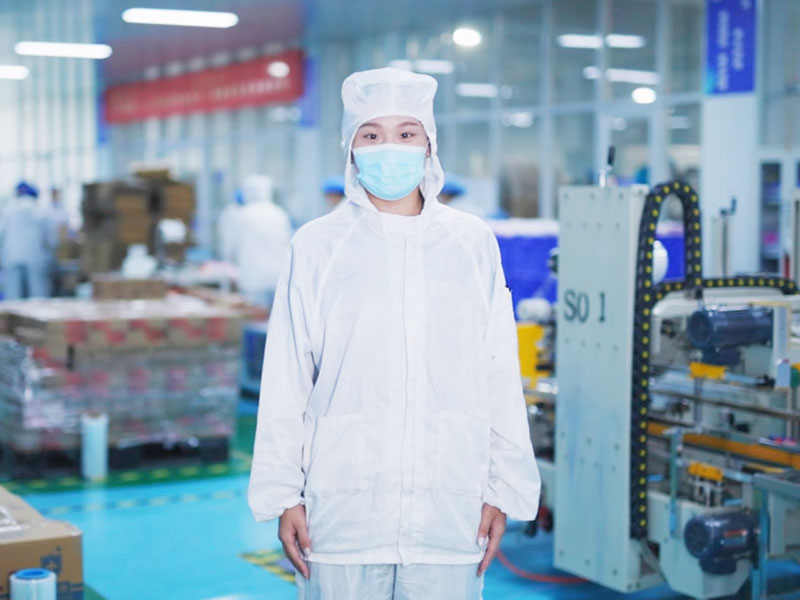
How to vet a Chinese adult diaper and underpad manufacturer: the four documents that matter, the red flags to walk away from, and how sampling and MOQ work in practice.
Quick answer: A reliable Chinese adult diaper manufacturer can document four things before you place a deposit — medical-device certification (ISO 13485, FDA registration, EU CE under MDR), production lines it owns rather than rents, in-house control of nonwoven and PE film, and a multi-base footprint that protects your delivery schedule. Ask for the evidence behind each claim, not the claim itself.
\\nWhat "reliable" actually means in this category
\\nAdult diapers and underpads are absorbent hygiene products that touch broken skin, so a supplier is judged on two things at once: whether the product is legally sellable in your market, and whether the factory can repeat the same specification on the tenth container as on the first sample. Price quotations rarely reveal either. Documentation does.
\\nThe four pillars, and the evidence to request
\\nUse this table as a screening sheet. Every row is something a serious exporter can produce within a few working days; a supplier who cannot produce it is either trading through a third party or has not been audited.
\\n| Pillar | What it proves | Document to request |
|---|---|---|
| Medical-grade certification | The quality system is audited, not self-declared | ISO 13485 certificate with scope and expiry, FDA establishment registration number, EU CE certificate citing MDR |
| Owned production capacity | Lead times and specifications stay under the factory’s control | Line count, workshop photos or video call, equipment list, capacity per shift |
| In-house raw materials | Quality is stabilised upstream instead of bought on the spot market | Evidence of spunbond and meltblown nonwoven production, PE film extrusion, incoming-material QC records |
| Export track record | The supplier has already cleared customs and compliance in similar markets | Country list, two or three reference markets, test reports from accredited labs |
Red flags worth walking away from
\\n- \\n
- Certificates with no scope. A logo on a slide is not a certificate. Ask for the PDF, read the scope, check the expiry date. \\n
- Same specification, wildly different price. In this category the difference is almost always grams of SAP, pulp ratio or backsheet gauge. Ask for the bill of materials per size. \\n
- No answer on MOQ logic. A factory that cannot explain why its minimum order quantity exists has not planned its lines for export orders. \\n
- Photographs that cannot be verified. Request a live video call walking one line from raw material to palletising. \\n
How sampling and MOQ usually work
\\nFor OEM and private-label programmes, the standard sequence is: specification sheet agreed, free samples produced against that sheet, buyer validation, then a first production run. Aishule works to a minimum order quantity of two sizes per 20GP container for OEM orders, which lets a buyer test two SKUs in one shipment rather than committing a full container to a single size. Customisation covers logo, packaging, style and colour.
\\nWhy multi-base capacity matters more than headline output
\\nSingle-site factories are efficient until one line goes down or a raw-material shipment is delayed. A group running production across several bases can move an order between sites without renegotiating the specification. That flexibility is what protects a retail launch date, and it is worth asking about explicitly: which base will produce my order, and what is the fallback.
\\nWhat a remote factory audit should cover
\nIf you cannot visit Linyi or any other production base, a structured video audit gets you most of the way. Walk four areas in order and ask for the camera to be handed to whoever runs each one. First, incoming materials: how nonwoven rolls and SAP are received, inspected and quarantined. Second, the line itself: running speed, in-line inspection points, and what happens to rejected product. Third, the purification workshop: how entry is controlled, how pressure differentials are maintained, and what the last environmental monitoring report showed. Fourth, finished goods: how cartons are palletised, labelled and stored, and whether there is a separate quarantine area for holds. A factory that answers each question with a procedure, rather than a promise, is a factory that has been audited before.
\nCommercial terms that reveal how a factory thinks
\nTwo clauses in a quotation tell you more than the unit price. The first is how the specification is locked: a serious manufacturer attaches a bill of materials per size — SAP grams, pulp, backsheet gauge, adhesive type — and states which of those can change without written approval. The second is how deviations are handled: whether the supplier defines an AQL level, who pays for re-work, and what the remedy is if a container arrives outside specification. Ask both questions before discussing price; the answers determine whether price is comparable at all. For first orders, a factory that offers free samples against a written specification sheet and holds that specification through production is a safer partner than one that quotes lowest and negotiates specifications later.
\nWhere Aishule fits
\\nASL Group (Shandong Aishule Hygiene Products Co., Ltd.) was founded in 1998 in Linyi, Shandong, and operates 130+ high-speed production lines across a 400,000 m㎡ footprint with a 100,000-grade purification workshop and 1,500+ employees. The group holds 180+ invention and utility model patents, runs in-house nonwoven and PE film production, and supplies adult diapers, pull-up pants, underpads, pet care products and wipes to more than 70 countries and regions. Certifications include ISO 9001, ISO 14001, ISO 13485, CE, FDA, FSC, WCA and MSDS.
\\nIf you are shortlisting suppliers, the fastest way to compare is to send the same specification sheet to every candidate and see who returns a documented answer. Request a quotation, or review the adult diaper range and certificates first.
Related reading: all news and articles · product range · contact us.
Recent Posts
- Deodorized adult diapers are effective in eliminating odor and inhibiting bacteria
- What is the most discreet adult diaper?
- How to choose the size of incontinence adult diapers?
- Helping you choose the right incontinence diaper for elderly
Contact Aishule Hygiene Products
- Address (China HQ): Northwest Corner, Qiyang Road and Industrial 3 road intersection, High-tech Zone, Linyi, Shandong, CHINA
- Address (Malaysia Office): Advanced Safety Lifecare Sdn. Bhd. LOT 7962, BATU 22, JALAN JOHOR BAHRU-AIR HITAM, 81000 KULAI, JOHOR, MALAYSIA
- Tel: +86-539-8488855 / +86-539-8488865
- Email: info@jingxincare.com
- Business hours: Mon - Fri 9:00 - 21:00
- Send an inquiry