Deodorized adult diapers are effective in eliminating odor and inhibiting bacteria
by Aishule Hygiene Products
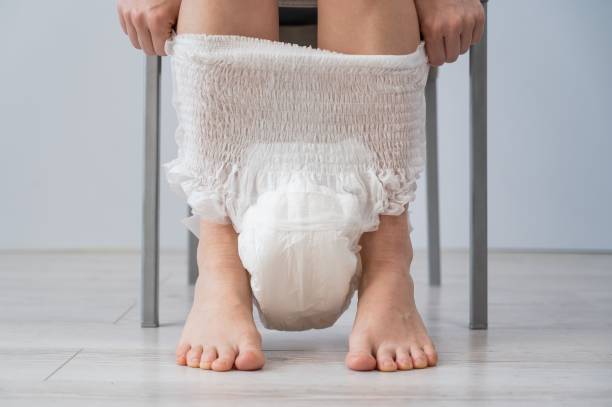
How deodorising adult diapers actually work: odour-binding agents, antibacterial treatment and breathable backsheets, plus the test reports to request before buying.
Quick answer: Deodorising adult diapers work on three mechanisms at once — odour-binding agents that lock onto ammonia, antibacterial treatment that stops the bacteria producing it, and a breathable backsheet that removes the warm, humid conditions those bacteria need. Effectiveness should be checked with a test report, not a scent sample.
\\nWhere the smell actually comes from
\\nFresh urine is almost odourless. The smell appears when bacteria in the absorbent core break urea down into ammonia, and when that ammonia turns volatile in a warm, moist environment. That sequence explains why a product can absorb well and still smell: absorption capacity and odour control are separate engineering problems. It also explains why masking a smell with fragrance tends to fail — the fragrance fades while the ammonia keeps being produced.
\\nThe three mechanisms, and what each one is for
\\n| Mechanism | What it does | Where it matters most |
|---|---|---|
| Odour-binding agents | Chemically bind ammonia and amine compounds so they cannot become airborne | Night wear, long intervals between changes |
| Antibacterial treatment | Inhibits the bacteria that convert urea into ammonia | Extended wear, warm climates, bedbound users |
| Breathable backsheet | Lets humidity escape, reducing the warm micro-climate odour needs | Daytime wear, humid warehouses and homes |
Antibacterial function is also a skin-health function
\\nInhibiting bacterial growth inside the core does two jobs: it reduces odour, and it lowers the bacterial load sitting against skin for hours. For elderly and bedbound users, where the interval between changes can stretch, that second effect is the one carers notice — less irritation, fewer episodes of maceration. It is a reason to look past fragrance claims and ask how the antibacterial function was verified.
\\nWhat to ask a supplier before buying
\\n- \\n
- Which mechanism is used, and at what loading? Odour-binding chemistry, antibacterial agent, or both. \\n
- Is there a test report? Ask for odour-reduction or antibacterial testing from an accredited laboratory, with the method named. \\n
- Does the function survive storage? Antibacterial treatments and odour binders have to remain active after months in a warehouse. \\n
- Is the claim consistent across sizes? A core that carries the treatment in one size should carry it in every size. \\n
Choosing the right format
\\nOdour control is delivered differently by format. Open-type adult diapers with tape tabs suit bedbound users and allow carer adjustment; pull-up pants suit ambulant users who want independence and discretion; underpads protect bedding and are used alongside either. In practice the format decision is made by mobility first and absorbency second — a product that fits the user’s routine gets changed on time, and timely changing does more for odour than any additive.
\\nPractical habits that multiply the effect
\\n- \\n
- Change on a schedule rather than waiting for discomfort — ammonia builds well before the user notices. \\n
- Keep unused products sealed; an open pack in a humid bathroom degrades the backsheet and the treatment. \\n
- Clean and dry skin before applying a new product; residual moisture accelerates bacterial growth. \\n
- Store cartons off the floor in a ventilated room, especially in tropical markets. \\n
How to evaluate an odour claim on a sample
\nA sample can tell you whether a product smells acceptable today; it cannot tell you whether the treatment is real. To separate the two, run three checks. Ask for the test report first and read the method — odour reduction and antibacterial performance are measured differently, and a report that names neither is decoration. Second, ask what the active mechanism is and at what loading, then ask whether that loading is identical across sizes; a treatment dosed only in the flagship SKU is a marketing decision, not a product decision. Third, leave a sample sealed in its packaging for the shelf life you expect in your market, then open it — treatments that degrade in storage are common in low-cost products, and the failure only shows up after your customers have bought the product.
\nWhere deodorising products fit in a care setting
\nIn nursing homes and home care, odour complaints are usually a change-interval problem before they are a product problem. Deodorising products buy time — they extend the window in which a user remains comfortable and a room remains acceptable — which is why they matter most on night shifts and in shared rooms. The practical setup is a higher-absorbency deodorising product for overnight use, a lighter product during the day, and an underpad beneath either to protect bedding. Facilities that adopt this split typically report fewer linen changes and fewer complaints than facilities that standardise on a single product for all residents.
\nAishule’s position in this category
\\nAishule is a main drafting unit of the group standard for antibacterial and deodorising adult diapers, and applies deodorisation and antibacterial technology across its adult care range. The group holds 180+ invention and utility model patents covering breathability, deodorisation and antibacterial functions, runs 130+ high-speed production lines in a 400,000 m㎡ footprint, and exports to more than 70 countries with ISO 9001, ISO 14001, ISO 13485, CE, FDA, FSC and WCA certification.
\\nTo compare specifications, see the adult diaper range or send your requirement through the quotation form. Technical questions about odour testing are answered in our buyer FAQ.
Related reading: all news and articles · product range · contact us.
Recent Posts
- Reliable Chinese Manufacturers of Adult Diapers and Underpads
- What is the most discreet adult diaper?
- How to choose the size of incontinence adult diapers?
- Helping you choose the right incontinence diaper for elderly
Contact Aishule Hygiene Products
- Address (China HQ): Northwest Corner, Qiyang Road and Industrial 3 road intersection, High-tech Zone, Linyi, Shandong, CHINA
- Address (Malaysia Office): Advanced Safety Lifecare Sdn. Bhd. LOT 7962, BATU 22, JALAN JOHOR BAHRU-AIR HITAM, 81000 KULAI, JOHOR, MALAYSIA
- Tel: +86-539-8488855 / +86-539-8488865
- Email: info@jingxincare.com
- Business hours: Mon - Fri 9:00 - 21:00
- Send an inquiry