How to choose the size of incontinence adult diapers?
by Aishule Hygiene Products
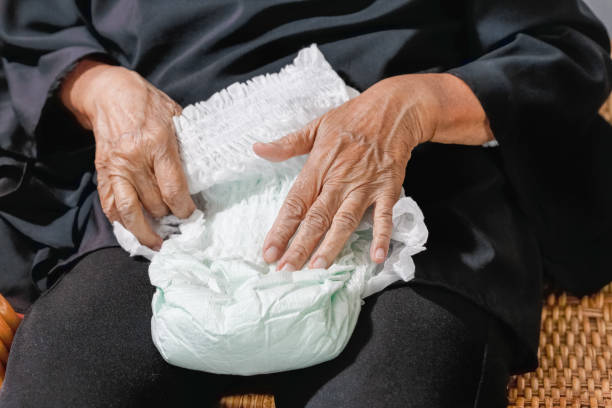
How to choose adult diaper size from waist and hip measurements, check the fit properly, match format to mobility, and avoid the five sizing mistakes that cause leakage.
Quick answer: Size an adult diaper from two measurements, not one — waist circumference and hip circumference — then choose the size that covers the larger number. Confirm the fit on the user rather than the tape: the product should sit snug at waist and leg cuffs with no gaps and no red marks. Absorbency level is a separate decision from size.
\\nMeasure in the right order
\\nUse a soft tape, measure over light clothing or directly on skin, and take both readings while the person is standing if possible. Waist is measured at the natural waistline, not at the hips; hip is measured at the widest point. Write both numbers down — comparing them is what prevents the most common sizing error, which is choosing by waist alone for a user whose hips are wider.
\\nFit check: what correct looks like
\\n| Check | Correct | What it means if wrong |
|---|---|---|
| Waist | Snug, tape tabs land on the front panel | Too loose → product slips when full; too tight → pressure marks |
| Leg cuffs | Flat against the groin, no gap | A gap is the single most common cause of leakage |
| Backsheet | Sits flat, no bunching at the spine | Bunching channels liquid sideways instead of into the core |
| Skin after removal | Dry, no red pressure lines | Persistent redness means the size or the change interval is wrong |
Match the format to mobility, then absorbency to routine
\\nFormat follows the user’s daily life more than the severity of incontinence. Ambulant users generally do better in pull-up pants, which they can change independently; bedbound and post-operative users need open-type diapers with tape tabs so a carer can adjust without lifting the body; underpads are used in both cases to protect bedding and reduce linen changes.
\\n| Situation | Format that usually works | Why |
|---|---|---|
| Ambulant, daytime, mild to moderate | Pull-up pants | Self-change, discretion, normal clothing |
| Bedbound or post-operative | Open-type diaper with tape tabs | Carer can adjust and re-close without moving the user |
| Overnight, any mobility level | Higher-absorbency diaper or pant plus underpad | Longer interval, and the underpad limits damage if it is exceeded |
| Chair or wheelchair, long sitting | Pull-up or open-type with high back-sheet breathability | Reduces the warm, humid conditions behind leakage and odour |
Five sizing mistakes that cause leakage complaints
\\n- \\n
- Sizing down to reduce bulk. A product that is too small leaks sooner, because the core cannot expand. \\n
- Sizing up for absorbency. Absorbency is a core specification, not a size; a larger product with a thin core still fails overnight. \\n
- Fastening tapes too high or too low. Tapes belong on the front panel, level with each other; angled tapes create the leg gap. \\n
- Ignoring weight change. Users losing or gaining weight need re-measuring; a size that worked three months ago may not fit now. \\n
- One size for a whole facility. Nursing homes get better results with a mixed SKU: two or three sizes across the resident population. \\n
Ordering in bulk: how to build the SKU mix
\\nFor distributors, care homes and private-label buyers, the practical approach is to size the population before sizing the order: count residents or end users by measurement band, then allocate cartons proportionally, holding one size up and one size down as buffer. Mixed-size orders are normal in export programmes — Aishule works to a minimum of two sizes per 20GP container for OEM orders, which is designed exactly for this kind of split. Free samples are available so the fit can be checked before the first production run.
\\nAbsorbency is a separate decision from size
\nOnce the size is right, absorbency is chosen by interval and volume, not by body size. A small, ambulant user who is changed every four hours needs a different core from a large, bedbound user changed twice a day, even if both wear the same size. Ask three questions: how long will the product be worn between changes, how much urine is passed in a single episode, and will the user be lying, sitting or walking for most of that interval. Lying users need the core to distribute liquid along the body rather than pool at one point; walking users need the product to stay in place as the legs move. Those two requirements pull core design in different directions, which is why the same size can work badly in the wrong scenario.
\nWhat to do when the size no longer fits
\nFit drifts. Weight loss after illness, weight gain from medication, reduced mobility and changes in carers all shift the measurement band. Re-measure whenever a user starts leaking after months of stable performance, when red marks appear at the waist or legs, or when a carer reports the product slips. In facilities, re-measure on a fixed cycle rather than waiting for a complaint, and keep one carton of the next size up in stock as a bridge. For distributors, the same principle applies to the SKU mix: a range that only covers the middle of the population will generate leakage complaints at both ends, and those complaints are usually attributed to the product rather than to the missing size.
\nWhere to go next
\\nAishule manufactures open-type adult diapers, pull-up pants and underpads on 130+ high-speed production lines across a 400,000 m㎡ footprint, with 180+ invention and utility model patents and certification to ISO 9001, ISO 14001, ISO 13485, CE, FDA, FSC and WCA. Products ship to more than 70 countries and regions.
\\nIf you need the current size chart for a specific product, ask our team and specify the market; the applicable chart depends on the SKU. You can also browse the pull-up pants and underpad ranges, or read the buyer FAQ on absorbency and change intervals.
Related reading: all news and articles · product range · contact us.
Recent Posts
- Reliable Chinese Manufacturers of Adult Diapers and Underpads
- Deodorized adult diapers are effective in eliminating odor and inhibiting bacteria
- What is the most discreet adult diaper?
- Helping you choose the right incontinence diaper for elderly
Contact Aishule Hygiene Products
- Address (China HQ): Northwest Corner, Qiyang Road and Industrial 3 road intersection, High-tech Zone, Linyi, Shandong, CHINA
- Address (Malaysia Office): Advanced Safety Lifecare Sdn. Bhd. LOT 7962, BATU 22, JALAN JOHOR BAHRU-AIR HITAM, 81000 KULAI, JOHOR, MALAYSIA
- Tel: +86-539-8488855 / +86-539-8488865
- Email: info@jingxincare.com
- Business hours: Mon - Fri 9:00 - 21:00
- Send an inquiry