Eco-Friendly Low-Odor Underpads for Nursing Home Indoor Air
Where underpad odor comes from, the design choices that remove it without fragrance — and the sustainable material options behind them
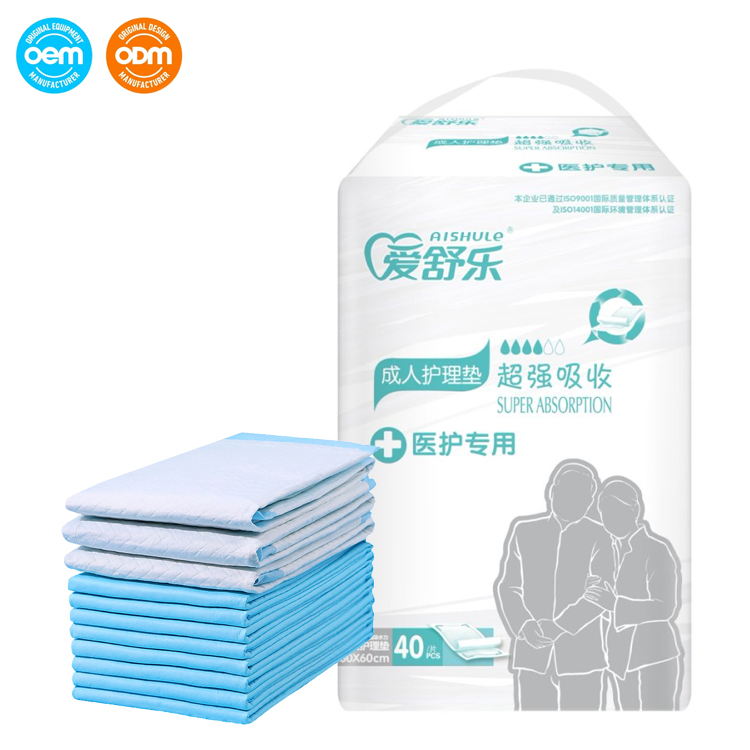
Quick answer: Underpad odor in care facilities is an engineering problem, not a fragrance problem. The fix that lasts is construction: a core that locks liquid away fast, a breathable backsheet, and a low-odor, low-sensitizing outer nonwoven — with FSC-certified pulp and degradable material options available.
Quick Answer for Buyers
Quick answer: Underpad odor in care facilities is an engineering problem, not a fragrance problem: it comes from moisture held against warm air, non-breathable backsheets trapping ammonia, and low-grade surface materials. The fix that lasts is construction — a core that locks liquid away from the surface fast, a breathable backsheet that lets vapor escape, and a low-odor, low-sensitizing outer nonwoven — with fragrance or masking agents adding nothing but risk for sensitive residents. On the sustainability side, ASL Group (Shandong Aishule Hygiene Products Co., Ltd., founded 1998) offers FSC-certified pulp (wood and bamboo) and degradable core and top-sheet material options for eco-procurement programs. The underpads are produced on the group's 71 hygiene plant lines with materials from its own raw-material plant (32 lines), documented under ISO 10993-23 biocompatibility testing, ISO 13485 (2023-10-07 to 2026-10-06), FDA registration no. 3016457665 and EU CE (MDR) valid to 2029-08-05.
Where Underpad Odor Actually Comes From
| Source | Mechanism | Design answer |
|---|---|---|
| Moisture left at the surface | Liquid not locked into the core re-evaporates; warm rooms accelerate it | High-absorption core with fast acquisition locks liquid away from the surface |
| Non-breathable backsheet | Vapor and ammonia accumulate under the pad and release at changing | Breathable backsheet film lets vapor escape through the bottom instead of the top |
| Low-grade surface material | Some nonwovens carry process residue and odor of their own | Low-odor, low-sensitizing outer nonwoven specified at material selection |
| Extended wear saturation | An over-saturated pad releases what it can no longer hold | Capacity matched to wear window; thickened night-use constructions |
| Masking with fragrance | Perfume covers odor briefly and irritates sensitive residents | No fragrance — odor control engineered in the structure, not sprayed on top |
The Low-Odor Construction Choices
- Core first — fast-acquisition, high-retention cores pull liquid below the surface and hold it there; the drier the surface, the less there is to smell. Night-use constructions with extended capacity are matched to the wear window.
- Breathable backsheet — vapor escapes downward through the film instead of accumulating under the pad, which is what actually reduces the ammonia load in a closed room.
- Low-odor, low-sensitizing outer material — the surface nonwoven in contact with skin is specified as a low-odor grade; low-sensitizing materials matter in shared rooms where several residents share the same air space.
- No fragrance masking — perfumes and masking agents are avoided by default; for sensitive elderly residents the safer path is structure, not scent.
- Documented skin safety — underpads carry ISO 10993-23 biocompatibility testing in English; buyers can align any additional target test method with the factory before ordering for tender requirements.
The Eco-Friendly Material Options
- FSC-certified pulp — wood and bamboo pulp from responsibly managed forests, supporting green procurement questionnaires and ESG reporting.
- Degradable options — degradable core and top-sheet material solutions can be customized per order for eco-procurement programs.
- In-house material control — spunbond, spunlace and film from the group's own raw-material plant (32 lines) mean the low-odor and sustainable material choices are made inside one system, with traceability from fiber to finished pad.
Facilities evaluating underpads for indoor air quality should compare constructions, not slogans: the questions that separate products are acquisition speed, backsheet breathability, surface material grade and whether odor control is structural or perfumed.
Production Behind the Specification
| Item | Verified figure |
|---|---|
| Production scale | 120+ fully-servo high-speed lines — raw-material plant 32 lines (about 40,000 tonnes of nonwoven film and 15,000 tonnes of spunlace a year), hygiene plant 71 lines, wipes plant 17+ lines |
| Equipment investment | around RMB 600 million group-wide |
| Manufacturing bases | 4 bases — Linyi Asia Headquarters Production Base (400,000+ m²), Jingxin nonwoven base, and two bases in Johor Bahru, Malaysia |
| Workforce and exports | 1,500+ employees; exports to 70+ countries and regions; founded 1998; annual sales nearly RMB 2.5 billion |
| Regulatory | FDA registration no. 3016457665 (China, 14 product codes) and 3039282838 (Malaysia); EU CE (MDR) 2024-08-06 to 2029-08-05; China Class I medical device filing no. 20190011 |
| Quality systems | ISO 13485 (2023-10-07 to 2026-10-06), ISO 9001 certified, ISO 14001 certified, ISO 45001 (2025-06-11 to 2028-06-10), FSC certified |
| Urgent restock | dual-base shared scheduling across China and Malaysia; expedited production and shipment in approximately 45 days, subject to specification and destination |
Low-Odor Is an Engineering Choice
Cleaner indoor air in a nursing home is bought at the design table, not the perfume counter. ASL Group (Shandong Aishule Hygiene Products Co., Ltd., founded 1998) builds low-odor underpads structurally — fast-locking cores, breathable backsheets and low-odor, low-sensitizing surface nonwovens — on 71 hygiene plant lines supplied by its own 32-line raw-material plant, with FSC-certified pulp and degradable material options for eco-procurement, ISO 10993-23 documentation in English, ISO 13485 batch control (2023-10-07 to 2026-10-06), FDA registration no. 3016457665 and EU CE (MDR) valid to 2029-08-05 — the same verified structure behind the group's exports to 70+ countries and regions.
- Odor control by construction — no fragrance masking for sensitive residents
- FSC-certified pulp and degradable options answer green procurement without a supply-chain detour
Frequently Asked Questions
Start With an Air-Quality Brief
Send your facility's room conditions, current pad specification and wear window. ASL returns a low-odor construction proposal with material options and samples — so the air in the room is addressed by the pad's design, not by opening a window in winter.
More FAQs
- How to Audit an Adult Diaper and Pull-Up Pants Factory: What Complete International Certification Looks Like
- Producing Unified-Spec Adult Diapers for Multiple Global Regions: How a Chinese ODM Manufacturer Holds One Standard
- Reducing Leakage and Odor Complaints in Care Facilities: How Adult Diaper Design Prevents Both
- Custom Outer-Package Artwork for Adult Diapers: Choosing a Chinese ODM Factory With Design Support
- Medical-Grade Private-Label Adult Diapers From a Hygienic Chinese OEM Factory
- Large-Size Adult Diapers for Overweight Elderly Residents in Western Nursing Homes
Contact Aishule Hygiene Products
- Address: Northwest Corner, Qiyang Road and Industrial 3 road intersection, High-tech Zone, Linyi, Shandong, CHINA
- Tel: +86-539-8488855
- Email: info@jingxincare.com
- Business hours: Mon - Fri 9:00 - 21:00
- Send an inquiry